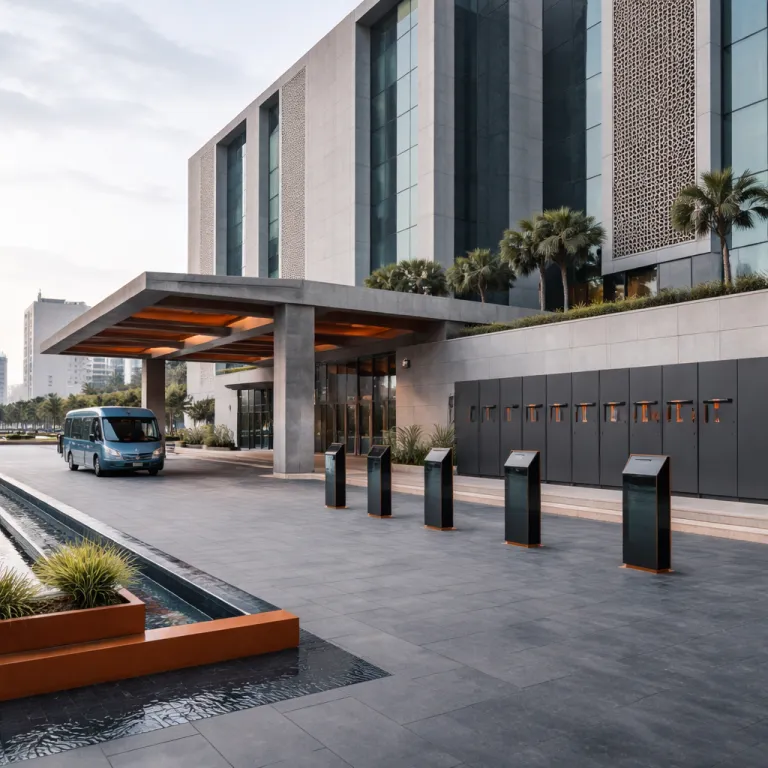
Smart hotel technology in Qatar and the new meaning of welcome
Walk into a leading hotel in Doha today and the first impression is no longer just marble, scent and a perfectly rehearsed “welcome”. Behind the scenes, connected hospitality platforms are quietly orchestrating everything from your airport transfer to the temperature of your room before you arrive. For business leisure travelers who extend work trips into long weekends, this shift in hospitality is changing what luxury actually feels like.
Qatar’s hospitality industry has become a live laboratory for smart solutions, with Ooredoo’s Smart Hospitality platform, INNOVATECH International for Contracting and HDL Qatar wiring hotels into dense networks of digital systems. These platforms connect smart thermostats, lighting, curtains and entertainment into a single in-room interface, while hotel systems in the back office analyse guest data to predict preferences in real time. For guests, the promise is simple: less friction, more time to enjoy Doha’s museums, desert drives and the evolving smart tourism offer that Qatar Tourism is aggressively promoting.
At the luxury end of tourism in Qatar, high-end properties are now competing on how seamlessly they blend human warmth with digital solutions rather than on chandelier size. Around 50% of hotels in Qatar are reported to be implementing smart technologies, and energy audits suggest up to 20% savings when intelligent building management systems handle climate control. That matters in a country where every square metre of glass facing the Gulf must be cooled, and where Qatar’s smart positioning is part of a broader national digital transformation narrative.
For the executive traveler, the question is not whether technology will appear during a stay, but how visible it should be. Connected hotel infrastructure works best when it fades into the background, letting the guest experience feel intuitive rather than instructional. When a digital-first strategy is executed well, the guest barely notices the internet of things devices, the lock systems or the data flows that make the stay feel almost anticipatory.
Contactless check-in is the most obvious front-of-house expression of this shift, and Doha’s leading hotels are embracing it with varying degrees of confidence. Some properties allow full digital access to rooms via mobile keys, using RFID-based lock systems that talk to central hotel platforms in real time. Others still insist on a brief stop at the front desk, arguing that hospitality is not just about access control but about reading a guest’s mood before they reach the lift.
Qatar tourism authorities quietly support both approaches, as long as security and guest experience are not compromised. Smart tourism in Qatar is framed as an enabler of better service, not a replacement for it, and that nuance matters in a culture where personal welcome still carries weight. As one Doha-based front office manager put it in a recent industry roundtable, “The app should open the door, but the smile should still open the stay.” The best smart hotels in Doha understand that the majlis-style greeting and the app notification can coexist without diluting either.
AI concierges, digital access and the art of the Doha arrival
AI concierge services are the current obsession in smart hotel technology in Qatar, but the label hides wildly different realities. In some hotels, the “AI concierge” is little more than a chatbot answering basic tourism questions about Souq Waqif opening hours or museum tickets. In others, artificial intelligence is woven into hotel systems that analyse guest profiles, travel patterns and previous stays to shape a genuinely personalised arrival.
When AI is used well, it can pre-assign a quiet-floor room for a guest arriving on a red-eye flight, lower the lights, set the temperature to a learned preference and have Arabic coffee ready within minutes. That is smart technology serving hospitality, not the other way around, and it is where Qatar’s most ambitious hotels are heading. Ooredoo’s Smart Hospitality solutions, for example, integrate internet of things sensors, RFID access and property management systems so that staff see real-time information about guest movements without constantly knocking on doors.
Contactless check-in sits at the heart of this new choreography of arrival. For some business travelers, skipping the front desk and heading straight to the room via a digital key is the ultimate expression of smart tourism: no queues, no paperwork, no awkward small talk after a long flight. For others, especially repeat guests who value relationships, that same process can feel like being processed by systems rather than welcomed by people.
Luxury hotels in Qatar are experimenting with hybrid models that respect both instincts. A guest can complete digital check-in on the way from Hamad International Airport, receive secure access credentials on their phone, then still be met by name in the lobby by a guest relations manager who has their preferences on a tablet. The lock system recognises the device, the staff recognise the person, and the guest experience feels both efficient and human. This is where smart hotel strategies in Doha are starting to show real maturity.
For premium booking and review platforms that curate leading hotels for discerning Qatar-based travelers, the arrival experience is now a key differentiator. A property that offers only app-based access without any meaningful visitor engagement risks feeling like an airport lounge with beds. By contrast, a hotel that uses digital tools to remove friction while preserving the ritual of welcome earns loyalty from executives who could stay anywhere on their global travel circuit. As one frequent Doha visitor quoted in regional hospitality research noted, “I want the tech to save me time, not to replace the feeling that someone is genuinely glad I am here.”
There is also a regional learning loop at play, as Qatari travelers compare Doha’s digital hospitality with tech-forward stays abroad. Articles on refined eco-conscious stays, such as the guide to luxury accommodations in Cairns with sustainable tour partners for discerning Qatar travellers, show how other destinations balance sustainability, technology and service. Qatar’s hotels are under pressure to match that sophistication while still reflecting local expectations of generosity and presence.
Inside the smart room: comfort, complexity and the privacy trade off
Step into a new-generation smart room in Doha and the first instinct is often curiosity. One-touch panels, voice controls, tablet interfaces and app-based remotes promise to put every aspect of the room under the guest’s command. Lights, curtains, temperature, entertainment and even bathroom floor heating in some InterContinental Doha suites are now part of a tightly integrated smart hotel ecosystem.
When these systems are designed with restraint, they elevate the guest experience in ways that feel almost invisible. A sensor can tell hotel systems that a guest has left the room, allowing climate control to ease off and energy use to drop without sacrificing comfort on return. Industry reports suggest that such integrated platforms can cut energy consumption by around 20%, a significant gain in Qatar’s climate and a quiet win for sustainability-minded tourism.
The problem arises when technology overwhelms rather than supports. Executives arriving from long flights do not want to study a digital manual just to switch off a reading light, and poorly designed interfaces can turn a smart room into a puzzle. Smart hotels that chase every possible feature without editing for clarity risk undermining the very sense of ease that luxury should provide.
Privacy is the other fault line running through smart hotel technology in Qatar. To deliver hyper-personalised service, hotels increasingly rely on detailed guest information, from pillow preferences to minibar habits and spa bookings. The hospitality industry must decide how far to push this, and how transparently to communicate what is being collected, how long it is stored and whether any third-party partners can access it.
For many guests, the line is simple: use my data to make my stay smoother, but do not surprise me. Clear privacy dashboards in hotel apps, opt-in controls for data sharing and visible explanations of internet of things devices in rooms can build trust rather than suspicion. Without that clarity, even the most elegant smart technology can feel like surveillance rather than service.
Qatar’s most forward-thinking hotels are starting to frame privacy as part of luxury, not a legal afterthought. They emphasise that AI concierge tools and IoT sensors exist to reduce unnecessary staff intrusion, not to monitor behaviour for marketing purposes. For Qatar-based travelers used to reading about sustainable, tech-enabled stays abroad, such as the refined eco friendly luxury accommodation in Queensland for discerning Qatar travelers, this level of transparency is fast becoming a baseline expectation.
From glass towers to living systems: where Qatar’s smart hotels go next
Qatar’s luxury skyline has long been defined by glass towers, but the real competition now lies in invisible layers of code and connectivity. Smart hotel technology in Qatar is moving from isolated gadgets to fully orchestrated systems, where every lock system, sensor and service channel feeds into a single view of the guest. For independent evaluators of the market, this shift changes how properties are assessed for a discerning, business-led audience.
Partnerships with technology providers such as INNOVATECH International for Contracting and HDL Qatar are giving hotels access to sophisticated building automation that used to be reserved for new builds. Retrofitted smart solutions now allow established hotels to upgrade lock systems, lighting and climate control without closing floors for months. Ooredoo’s connectivity backbone ensures that these internet of things deployments remain stable, secure and responsive even during peak tourism periods.
At the same time, Qatar’s hospitality industry is watching global moves in brand strategy and tech adoption. When IHG bets on a new luxury flag for Doha, as analysed in this piece on what a new lifestyle luxury signing signals for Doha, the subtext is often about digital transformation as much as design. New brands arrive with expectations of app-based services, integrated CRM, API-driven guest profiles and a more fluid relationship between work and leisure spaces.
For Qatar’s smart positioning to feel authentic, hotels must resist the temptation to automate every interaction. The best use of smart technology is to free staff from repetitive tasks so they can focus on high-value, human moments: the tea offered at the right time, the flexible late checkout for a guest facing a delayed flight, the quiet handling of a sensitive request. When hotel systems surface real-time insights about guest needs, well-trained teams can act with speed and discretion.
There is also a strategic opportunity for Qatar tourism authorities to frame smart tourism as part of a broader national narrative about innovation and hospitality. By setting clear guidelines on data protection, interoperability standards and minimum service expectations, regulators can prevent a fragmented landscape of incompatible apps and uneven guest experiences. That would help ensure that smart hotels in Doha, Lusail and beyond feel like parts of a coherent ecosystem rather than isolated experiments.
For now, the most interesting question is not whether technology will define the future of hospitality in Qatar, but who will control its tone. Hotels that treat smart systems as silent partners rather than showpieces will earn the trust of guests who value both efficiency and empathy. Those that chase gimmicks risk being remembered for the wrong reasons in a market where word of mouth still travels faster than any digital campaign.
Key figures shaping smart hotel technology in Qatar
- Around 50% of hotels in Qatar are reported to be implementing smart technologies, indicating that smart hotel adoption has moved from niche experiment to mainstream expectation in the national hospitality industry (industry reports from regional hospitality consultancies, recent years; for example, Colliers International and Knight Frank market briefings on Qatar’s hotel pipeline).
- Energy audits from properties using integrated smart hotel systems show approximately 20% reductions in energy consumption, a significant operational saving in Qatar’s hot climate and a meaningful contribution to more sustainable tourism (hotel energy audits and vendor case studies from Ooredoo Smart Hospitality and HDL Qatar, recent years).
- Qatar’s hospitality market is projected to grow at a compound annual rate of about 7.15% toward the next decade, with technology-led differentiation cited as a key driver of competitiveness among luxury and premium hotels (regional market analyses from firms such as Colliers, Knight Frank and other Gulf-focused consultancies, recent years).
- Since Ooredoo launched its Smart Hospitality solutions and Grand Hyatt Doha introduced a Digital Hospitality Network, the market has seen steady expansion of AI concierge tools, mobile app-based room controls and digital access systems across leading hotels in Doha (industry timelines, Ooredoo press releases and Grand Hyatt Doha announcements, recent years).
Expert references
What are smart hotel technologies? They are technologies that automate and connect hotel services for enhanced guest experiences. Which hotels in Qatar use smart technologies? Hotels like Grand Hyatt Doha and other leading properties have adopted smart solutions, according to vendor case studies and local press coverage. How do smart hotel systems benefit guests? They offer personalised services, energy efficiency and convenience while giving staff better tools to anticipate needs.
Suggested further reading: Skift on Gulf hotel technology trends; Qatar Tourism official hospitality reports; global luxury hotel technology analyses from firms such as McKinsey & Company and regional consultancies including Colliers and Knight Frank.