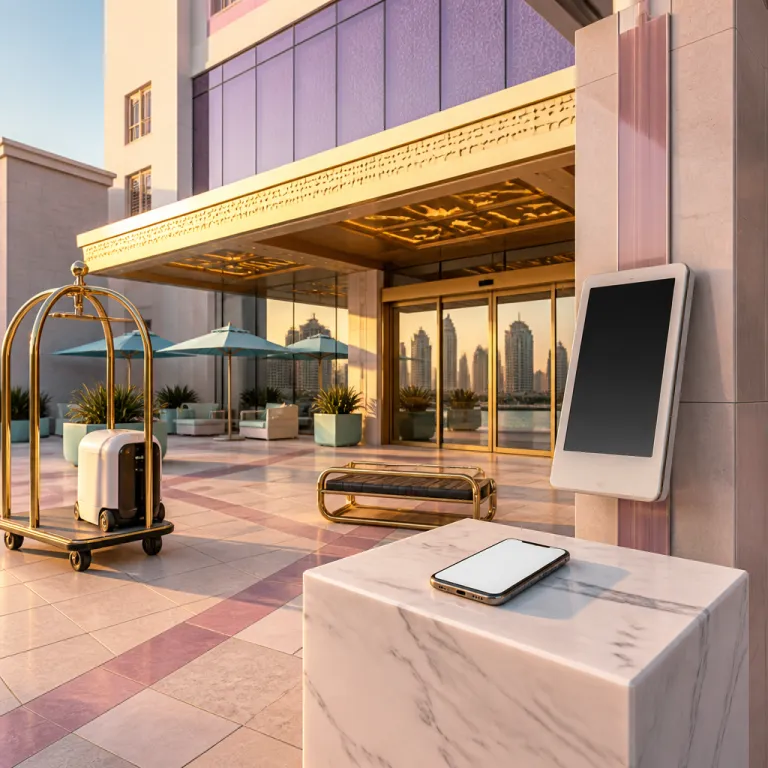
Hotel technology in Qatar moves from lobby ritual to phone ritual
In Doha, the most interesting hotel technology story is no longer the chandelier in the lobby. Luxury travelers now judge five-star properties by how quickly a mobile key opens the door and how seamlessly the hotel app handles every request, from airport pick-up to late check-out. For executives extending a business trip into leisure, that shift changes how they choose each stay in Qatar and how they plan long-term travel patterns across the destination.
Qatar has become a regional test bed where hospitality brands quietly trial contactless check-in, AI-powered concierges and smart room controls before rolling them out to other international markets. W Doha Hotel & Residences was among the first in the country to offer keyless mobile check-in, and that early move set expectations for resorts and city hotels that now compete on cutting-edge digital convenience as much as on marble and views. This new layer of innovation sits alongside warm hospitality rooted in Qatari culture, so the best properties blend intuitive apps with a human team that still remembers your name and your preferred dining experience.
For travelers who follow Qatar tourism developments closely, the shift is obvious in Doha’s densest luxury corridors. In West Bay and Lusail, major chains linked to Marriott Bonvoy, Hilton Honors and IHG One Rewards now treat mobile key access as standard rather than as an award-winning novelty. That means a guest can land in Doha, clear immigration, order a car and walk straight to their room without stopping at a front desk, turning the city into a wellness destination for time-poor executives who value every minute between meetings and resort downtime.
Where you can really skip the desk in Doha’s luxury hotels
Only a handful of properties in Qatar currently deliver a fully desk-free arrival, yet they set the benchmark for digital-first hospitality. W Doha Hotel & Residences, The Torch Doha and Q Premium Resort Hotel all offer mobile check-in through dedicated apps, allowing the guest to generate a digital key once the room is ready. These hotels use smartphones, Bluetooth and encrypted connections so that the guest experience feels effortless while the back-end service remains tightly controlled by the hotel team.
At W Doha, the keyless system that debuted in the region lets frequent travelers arrive from an international flight, bypass the lobby and head straight to their floor, where the phone unlocks the door in under a second when everything works as intended. The Torch Doha extends the idea with a multifunctional app that links room controls, dining reservations and wellness facilities, so the guest can adjust lighting or book a massage before even reaching the property. Q Premium Resort Hotel, focused on resort-style stays, has updated its app to support contactless services that cover everything from check-in to in-room dining, aligning with a broader commitment to sustainability by reducing paper and plastic key cards.
These systems are not theoretical; they already shape real experiences for travelers who visit Qatar for both tourism and business. Industry commentary from regional hotel operators, including interviews published in Middle East hospitality trade media in the last few years, suggests that contactless technology can cut check-in time from roughly eight to twelve minutes at a traditional desk to under sixty seconds when the app and Bluetooth connection work correctly. One front-office manager in Doha described it simply in an internal brand survey shared at an industry roundtable: “If the guest has completed pre-arrival, we can move them from airport to pillow in the time it used to take just to scan a passport.” For a luxury guest arriving late from Hamad International Airport, that time saving can mean catching a last seating at a signature dining venue or making an important video call with clients, rather than queuing at a counter while the front office prints forms and scans documents.
Inside the app journey: from booking to room entry
The real test of digital hotel services in Qatar is not whether an app exists, but whether the entire journey from booking to room entry feels coherent. A well-designed system starts on the booking website or loyalty portal, where the guest links their reservation to the hotel app and completes pre-arrival registration, including ID upload and estimated arrival time. When the hotel’s team clears the profile, the guest receives a push notification that the room is ready and that the digital key is active, turning the phone into a secure credential that works across elevators, parking and wellness areas.
In Doha, major international brands have refined this flow so that a frequent traveler can repeat it across multiple properties with minimal friction. Marriott Bonvoy, Hilton Honors and IHG One Rewards apps all support mobile keys at selected Doha hotels, which means a guest can move between a city tower and a beach resort over the same year without changing their digital habits. For a business-leisure executive, that continuity matters more than a single tourism award, because it shapes how they perceive the destination’s hospitality maturity and their willingness to extend stays for tourism or family visits.
When the system fails, the response reveals a hotel’s true service culture and unwavering commitment to guest care. Bluetooth glitches, low phone batteries or app crashes can all block access, so the best hotels train local staff to reissue keys quickly and to keep at least one traditional card ready as a backup, without making the guest feel at fault. This is where Qatar’s rich heritage of warm hospitality shows through the technology layer, as a front office manager walks the guest to the lift, resets access and perhaps offers a small dining gesture, turning a potential complaint into a story that still supports national tourism narratives about exceptional service.
Smart rooms, AI concierges and what actually improves your stay
Once inside the room, digital innovation in Qatar’s hotels shifts from access to ambience, and not every feature earns its place. Smart room controls that let you adjust lighting, temperature and curtains from a tablet or phone are becoming standard in new Doha properties, especially in Lusail where Rosewood Doha has launched with app-based guest services. Used well, these systems allow a guest to set a preferred sleep temperature, dim lights for a late-night dining experience and schedule curtains to open gently at sunrise over the destination skyline.
AI concierge pilots are the next layer, already tested at selected hotels in Doha for restaurant recommendations and bookings. These tools can parse local dining data, tourism calendars and social media trends to suggest where to eat near cultural landmarks or which wellness spa has availability after a long meeting day. For a traveler who values privacy, the advantage is clear; they can explore Qatari culture, plan experiences and secure reservations without standing at a busy desk or making calls from a noisy lobby.
Yet AI has limits, and the best hotels in Qatar are honest about them. An algorithm can surface award-winning restaurants and recent tourism award winners, but it cannot yet read the nuance of a guest’s mood after a delayed flight or a tough negotiation, which is where a human concierge still excels. For deeper context on how smart assistants are reshaping stays, readers can explore analysis of the AI concierge in Qatar hotels, which examines when to trust the bot and when to ask for a person, especially in luxury environments where exceptional service is non-negotiable.
Data, privacy and the fine print behind frictionless stays
Every time a guest uses connected hotel services in Qatar, they trade a little data for a little convenience. Mobile keys, AI concierges and smart room controls all generate usage data, from what time you usually return to the hotel to which dining options you prefer and how often you book spa treatments. For international travelers used to strict regulations at home, it is worth asking how hotels in Qatar handle this information and how long-term retention policies align with global best practice.
Most major brands operating in Doha state that their apps use encrypted connections and secure authentication methods, echoing the reassurance that “Guests use hotel apps to check in and access rooms via digital keys” and that “Yes, they use encrypted connections and secure authentication methods.” In practice, this typically means transport-layer security such as TLS, device-level biometrics like Face ID or fingerprint recognition and time-limited keys that expire at check-out. These statements matter for business travelers who may carry sensitive documents or devices and who need confidence that their phone-based key cannot be cloned easily. At the same time, local regulations and corporate policies increasingly push hotels and resorts to articulate a clear commitment to sustainability in data handling, reducing unnecessary tracking and giving guests control over marketing permissions and social media targeting.
For travelers booking through regional platforms, the practical advice is simple yet powerful. Download the relevant hotel app before you visit Qatar, check compatibility with your device and enable Bluetooth only when needed, rather than leaving it on permanently. When you arrive at a property, take a moment to review privacy settings inside the app, especially if you plan to use features that track wellness activities, resort bookings or location-based offers tied to nearby heritage sites and tourism attractions.
How myqatarstay.com curates tech forward luxury stays in Qatar
For discerning travelers, the challenge is not finding advanced hotel technology in Qatar, but filtering which implementations genuinely enhance experiences. Myqatarstay.com positions itself as an editorial-style curator rather than a simple listing site, focusing on properties where contactless check-in, mobile keys and smart rooms work reliably across multiple stays and multiple years. That means prioritizing hotels in Doha and Lusail where the technology supports warm hospitality rather than replacing it, and where local teams understand both the code and the culture.
The platform tracks which star-rated hotels in Doha offer true skip-the-desk arrivals, which ones still require a document stop and which ones only market the feature without operational depth, based on publicly available information and direct feedback from guests and hotel partners. It also maps how these properties fit into broader destination narratives, such as the Place Vendôme effect in Lusail where luxury retail and high-tech rooms intersect, explored in detail in this piece on the Lusail luxury hotel pull. For travelers who care about sustainability, myqatarstay.com highlights hotels with a visible environmental commitment, from energy-efficient smart rooms to reduced plastic and thoughtful sourcing in dining venues.
Qatar’s rich heritage and Qatari culture remain central to the curation, even when the focus is on apps and automation. A property linked to Katara Hospitality, for example, might pair cutting-edge room controls with majlis-style lounges and local art, creating an experience where technology fades into the background of exceptional service. Readers interested in how these values translate beyond Qatar can compare approaches in other markets through analyses of refined eco-friendly luxury stays, then return to Doha with a sharper eye for which options truly align with their expectations.
Why Qatar’s contactless hotels matter for the future of tourism
The rise of digital hotel services across Qatar is not just a gadget story; it is a strategic shift in how the country competes for high-value travelers. As national tourism authorities position the nation as both a stopover hub and a standalone destination, frictionless arrivals at hotels become part of the overall pitch. A guest who can step off a long-haul flight, reach their room in minutes and then slide seamlessly into a curated dining experience or spa session is more likely to extend their stay and to return within the same year.
Tourism awards and hospitality awards increasingly recognize digital innovation alongside traditional metrics such as design and service, which encourages properties to keep refining their apps and systems. Hotels based in Qatar that win a tourism award for technology often see a measurable uplift in international bookings, especially from markets where mobile-first behavior is entrenched. Over time, this creates a feedback loop where investment in cutting-edge systems, from AI concierges to smart energy management, supports both guest satisfaction and environmental sustainability goals.
For travelers, the practical takeaway is to treat technology as one more lens when choosing where to stay in Doha. Look for signs of unwavering commitment to both digital convenience and human warmth, whether in a city tower or a coastal resort. When you visit Qatar and use platforms like myqatarstay.com to compare options, pay attention to how each hotel describes its apps, its data practices and its integration of local heritage, because those details often predict whether your stay will feel merely efficient or genuinely exceptional.
Key figures behind Qatar’s contactless hotel shift
- Three named hotels in Qatar — W Doha Hotel & Residences, The Torch Doha and Q Premium Resort Hotel — are documented by regional reporting as offering mobile check-in and digital keys, illustrating how early adopters can shape expectations for the wider market.
- Commentary from local operators indicates that contactless check-in can reduce average arrival processing time from roughly eight to twelve minutes at a traditional front desk to under sixty seconds when the app and Bluetooth connection function correctly.
- The timeline of adoption shows that W Doha introduced keyless entry in the middle of the previous decade, The Torch Doha launched its multifunctional app shortly after and Q Premium Resort Hotel updated its app more recently, demonstrating a steady, multi-year evolution rather than a sudden trend.
- Industry analysis highlights that rising smartphone penetration among travelers and staff has been a primary driver of mobile key deployment in Doha hotels, aligning with broader tourism strategies that emphasize digital readiness and guest-centric innovation.
FAQ about mobile check in and hotel apps in Qatar
Which hotels in Qatar currently offer mobile check in and digital keys ?
W Doha Hotel & Residences, The Torch Doha and Q Premium Resort Hotel are all documented as offering mobile check-in through their own apps, allowing guests to access rooms via digital keys. Major international chains also provide mobile key functionality at selected Doha properties through loyalty apps such as Marriott Bonvoy, Hilton Honors and IHG One Rewards. Availability can vary by hotel, so guests should confirm features when booking.
How does mobile check in work for guests arriving in Doha ?
Guests typically download the relevant hotel app before arrival, link their reservation and complete pre check-in steps such as providing ID details and estimated arrival time. Once the room is ready, the hotel activates a digital key inside the app, which uses Bluetooth to unlock doors and sometimes elevators or parking gates. On arrival, the guest can go directly to the room, bypassing the front desk unless local regulations require a brief document verification.
Is mobile check in in Qatar hotels considered secure ?
Mobile check-in systems in Qatar hotels use encrypted connections and secure authentication methods similar to those used in mobile banking and payment apps. Hotels and technology partners design these systems so that digital keys are time-limited and tied to specific devices, reducing the risk of unauthorized access. Guests can enhance security by protecting phone lock screens and avoiding the sharing of login credentials.
What should I do if the hotel app or mobile key fails ?
If the app crashes or the digital key does not work, guests should first check Bluetooth settings and internet connectivity, then try refreshing the key inside the app. If the issue persists, visiting the front desk is the fastest solution, where staff can reissue the digital key or provide a traditional key card. Well-prepared hotels in Doha train teams to handle such cases quickly so that the disruption to the guest experience remains minimal.
Do I need mobile check in to enjoy a luxury stay in Qatar ?
Mobile check-in is not mandatory, but it can significantly streamline arrival and departure for busy travelers. Guests who prefer traditional interactions can still use the front desk while benefiting from other digital features such as messaging, dining reservations and spa bookings through the app. The most guest-focused hotels in Qatar offer both paths, letting each traveler choose the balance between technology and face-to-face hospitality.