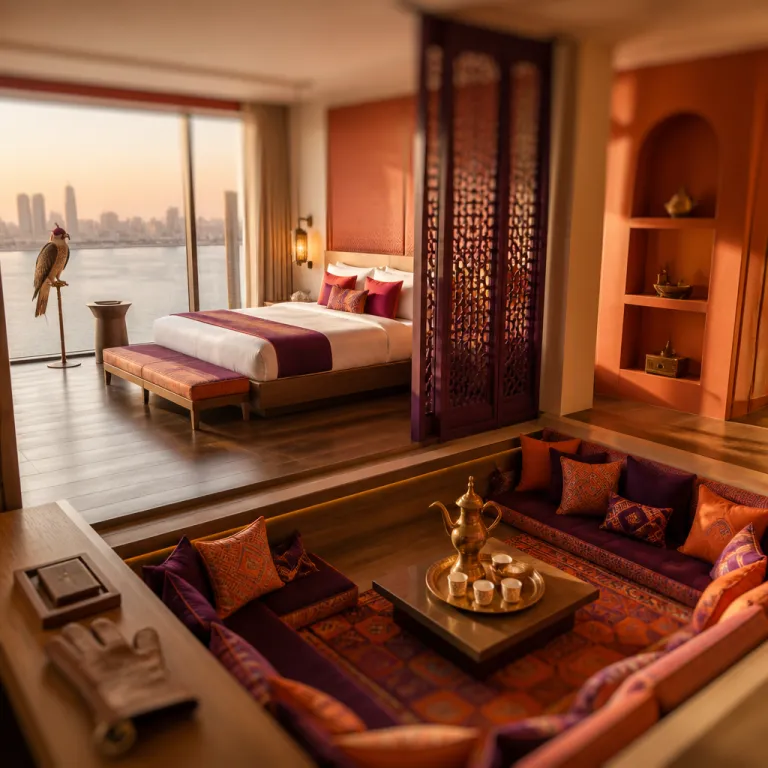
Where Arabian heritage meets the modern city hotel
In Doha, the idea of an arabian luxury hotel Qatar stay is shifting from pure spectacle toward cultural depth. The most interesting hotels in Doha Qatar now use heritage as a design language, shaping rooms and suites around the Qatari majlis tradition rather than just marble lobbies and a larger pool. For the business leisure guest, this means a hotel Doha stay can feel like a quiet seminar in local culture, held between meetings and a late night swim.
The majlis, literally a sitting place, is the social heart of a Qatari home where guests are received, coffee is poured and conversations stretch into the night. In the best hotels Doha has created, this concept appears in rooms suites layouts that carve out a low seated corner, with textiles referencing desert tribes and views that frame the Arabian Gulf instead of only the glass towers of West Bay. When you check availability on a luxury property in Qatar Doha, look beyond the rating and reviews and ask how the room interprets this majlis idea in a way that feels lived in rather than themed.
Some Doha hotels still treat heritage as a decorative layer, adding a mashrabiya screen beside a very modern desk and calling it a day. The more confident arabian luxury hotel Qatar addresses heritage structurally, using courtyards, shaded alleys and intimate rooms to slow the guest’s pace inside the city. On myqatarstay.com, every review of a Doha hotel now evaluates how convincingly its rooms, suites and shared spaces translate the majlis spirit of welcome into a contemporary luxury experience.
Sharq Village and Spa: the heritage village resort on Doha Bay
Sharq Village and Spa sits on Doha’s shoreline like a low rise village, a resort that deliberately turns its back on the vertical race of West Bay. This arabian luxury hotel Qatar property breaks down the scale of a large hotel into clusters of houses, narrow lanes and courtyards, so guests move through the space as they would in an older Gulf settlement rather than a generic city complex. The result is a hotel Doha stay where the walk from rooms to spa or swimming pool feels like a small journey, with changing views of the Arabian Gulf at every turn.
Rooms and suites here lean into heritage without sacrificing comfort, using timber ceilings, heavy doors and recessed seating to echo traditional architecture from coastal Qatar. Many rooms suites open onto patios that catch the sea breeze, while the spa complex is arranged like a self contained hamlet, with treatment rooms around a central pool that glows softly at night. For guests who value privacy, the resort layout means you can move from your room to the spa or fitness centre with minimal contact, yet still feel part of a coherent village narrative rather than an isolated wing of anonymous hotels.
From a review perspective, Sharq Village often divides opinion between travelers who want a sharper, more modern aesthetic and those who appreciate the slower rhythm of a heritage resort. On myqatarstay.com, our detailed reviews highlight how the property’s design references Al Zubarah style fortifications in subtle ways, especially in the massing of walls and the framing of sea views. If you are comparing hotels Doha wide, Sharq Village stands out as one of the few luxury resorts where the entire masterplan, not just a few rooms, is built around a Qatari village story rather than a generic Middle East beach template, making it a compelling candidate for any arabian luxury hotel Qatar itinerary.
For readers interested in art led hospitality, the contrast with more gallery focused properties is instructive, and you can see that tension explored in depth in our guide to art hotels in Doha where the collection rivals the concierge. That comparison helps clarify whether your next booking should prioritise a heritage village resort, a city hotel with museum grade collections or a hybrid that borrows from both worlds.
Souq Waqif stays: sleeping inside Doha’s old market district
Staying within Souq Waqif places you in the most atmospheric square kilometres of Doha, where the city’s trading past still shapes its present. Several restored heritage buildings have been converted into intimate hotels, often grouped under the Souq Waqif name, and they offer an arabian luxury hotel Qatar experience that is less about a single tower and more about a network of characterful addresses. Here, the hotel Doha concept stretches across alleys, courtyards and rooftop terraces, so guests step directly from their rooms into the market’s perfume stalls and falcon shops.
These properties are sometimes described collectively as Souq Waqif boutique hotels, though each building has its own personality, from ornate rooms with carved ceilings to more modern suites with clean lines and subtle heritage accents. When you check availability for a Doha hotel in this district, pay close attention to the exact building name, because reviews and rating scores can vary significantly between the different waqif boutique addresses. The best rooms suites combine thick walls that keep the heat at bay, carefully restored wooden windows and contemporary bathrooms, creating a layered sense of luxury that feels rooted in the city rather than imported from another Middle East capital.
From a guest experience angle, the real luxury here is proximity to daily life, especially in the early morning and late at night when the souq shifts mood. Our myqatarstay.com review team notes how the call to prayer, the rustle of traders setting up and the glow of lanterns after dark all filter into the hotel, turning each night into a kind of live theatre. For business leisure travelers used to sealed glass towers in hotels Doha wide, a stay in Souq Waqif can be a recalibration, and we explore how loyalty benefits translate into these heritage settings in our analysis of which Doha hotels reward loyalty beyond points.
Falconry suites, majlis lounges and the pull of the Arabian Gulf
Some of the most memorable arabian luxury hotel Qatar moments now revolve around falconry, the national sport that has moved from desert camps into carefully curated hotel experiences. On Banana Island Resort, for example, guests can book overwater villas whose terraces look straight across the Arabian Gulf, then attend falconry demonstrations on the island that explain the bond between handler and bird. The best reviews of this resort highlight how the falconry sessions, held in shaded courtyards rather than generic lawns, feel like an extension of the majlis tradition, with guests seated close enough to sense the birds’ power.
Inside Doha city limits, several hotels have created suites and lounges that nod to falconry through art, textures and curated objects rather than live birds. A well executed falconry suite might feature leather perches as sculptural elements, archival photographs of Qatari falconers and a dedicated majlis corner where guests can host private meetings that feel more like gatherings than boardroom sessions. When our team at myqatarstay.com conducts a review of such a suite, we look at how convincingly these references are integrated into the rooms, whether the views connect to the desert or sea and how the overall rating reflects both design ambition and day to day comfort.
For travelers comparing Doha hotels, the key is to separate marketing language from genuine cultural layering. A hotel Doha property that simply hangs a falcon painting in a modern corridor does not qualify as an immersive heritage experience, no matter how high its rating or how many pools it offers. By contrast, a resort that aligns its spa rituals, night lighting, rooms suites layout and even its fitness centre design with the rhythms of desert life is far more likely to deliver the kind of arabian luxury hotel Qatar stay that lingers in memory long after check out.
Business leisure guests planning short breaks from neighbouring capitals can see how these falconry and majlis focused properties fit into two night itineraries in our guide to Doha hotel breaks that GCC travellers are booking for weekend escapes. That context helps you decide whether to prioritise a city hotel with strong cultural programming or a resort style escape with direct Arabian Gulf access and structured falconry encounters.
Mandarin Oriental, West Bay towers and the balance of heritage and modernity
In the heart of Doha, Mandarin Oriental has become a reference point for how an international brand can interpret local heritage within a very modern city framework. The property, sometimes informally described by guests as Mandarin Oriental Doha or even Oriental Doha, weaves Qatari motifs into its rooms and suites through latticework, textiles and a carefully calibrated colour palette. Unlike some hotels in Qatar that treat heritage as a surface pattern, this hotel Doha integrates the majlis concept into its lounge layouts, encouraging guests to sit low, linger over coffee and treat the lobby as a social salon rather than a transit zone.
Across West Bay, several glass tower hotels Doha has developed in recent years are now retrofitting heritage cues into their upper floor suites, especially those with long views over the Arabian Gulf. Here, the challenge is sharper, because the architecture is unapologetically vertical and modern, so designers must work harder to create a sense of desert calm inside rooms that sit dozens of floors above the city. Our myqatarstay.com review methodology looks closely at how these rooms suites balance floor to ceiling windows, high tech controls and a strong fitness centre or spa offering with quieter heritage gestures, from majlis style seating to curated regional art.
For guests comparing hotels in Doha Qatar, the decision often comes down to whether you want to feel embedded in the historic fabric, as in Souq Waqif, or elevated above the city in West Bay with a more abstracted sense of place. Both models can deliver an arabian luxury hotel Qatar experience, but only if the cultural references are more than decorative. When you check availability and scan reviews, pay attention to how often guests mention the atmosphere of the rooms, the quality of night time views and the way public spaces like the spa, pool deck or swimming pool terrace support informal majlis style gatherings rather than just transactional service.
Our team has seen how some Doha hotels now invite regional creatives such as Chua Agdeppa and Joe Chua to advise on art placement and spatial storytelling, ensuring that heritage references feel current rather than nostalgic. This collaboration between hoteliers, designers and cultural practitioners is gradually raising the standard of what a luxury hotel in Qatar can be, moving the conversation beyond thread count and room size toward narrative, memory and a more nuanced understanding of place.
How to read reviews and book heritage rich luxury stays in Qatar
Choosing an arabian luxury hotel Qatar stay that genuinely reflects local heritage requires a more forensic approach to booking than simply sorting by rating. Start by reading multiple reviews for each hotel Doha option, looking for specific mentions of majlis spaces, falconry programmes, heritage architecture and how guests describe the atmosphere of rooms at night. Generic praise for a large pool or a modern fitness centre is useful, but it rarely tells you whether the property will connect you meaningfully to Qatar Doha culture.
When you check availability on myqatarstay.com, use filters and editorial notes to distinguish between resorts, city hotels and heritage conversions, then drill down into room categories that emphasise suites or rooms suites with cultural themes. Pay attention to whether reviews mention noise from the city, the quality of views over the Arabian Gulf and the way staff manage guest flow between spa, swimming pool and public lounges, because these details shape how relaxed a majlis style stay can feel. For business leisure guests, proximity to key districts such as West Bay, Souq Waqif and the financial core of Doha Qatar must be balanced against the desire for a slower, more grounded experience.
Our editorial stance at myqatarstay.com is clear ; we prioritise hotels in Qatar that treat heritage as a living framework rather than a marketing motif. That means our review team spends time in rooms, suites and public areas at different times of day and night, assessing not just design but how guests actually use the spaces. Over time, this approach has allowed us to map which Doha hotels consistently deliver on the promise of a culturally layered stay, helping you make confident booking decisions that align with both your schedule and your appetite for a deeper connection to place.
FAQ: Arabian heritage rooms and majlis style stays in Doha
What defines a majlis inspired room in a Doha luxury hotel ?
A majlis inspired room in a Doha hotel typically includes a dedicated low seating area, often with cushions or a built in bench, arranged for conversation rather than television viewing. The layout encourages guests to host small gatherings, echoing the social function of a traditional Qatari majlis. Materials such as timber, textured plaster and woven textiles are usually combined with modern comforts to keep the space both authentic and functional.
Are Souq Waqif hotels suitable for business travellers extending their stay ?
Souq Waqif hotels can work very well for business leisure travellers who value atmosphere over corporate formality. Many properties offer reliable Wi Fi, comfortable rooms and access to spa or fitness facilities, while placing guests within walking distance of key cultural sites. The trade off is that you may be slightly further from West Bay offices, so it suits travellers whose meetings are spread across the city or who prioritise evening immersion in local life.
How do Banana Island Resort and Sharq Village differ for heritage focused stays ?
Banana Island Resort delivers a resort style escape with overwater villas, strong Arabian Gulf views and structured activities such as falconry demonstrations on the island. Sharq Village and Spa, by contrast, feels more like a coastal heritage village, with low rise architecture, courtyards and a spa complex that mirrors traditional settlement patterns. Both offer an arabian luxury hotel Qatar experience, but Banana Island leans toward island seclusion while Sharq Village keeps you visually connected to Doha’s skyline.
Which Doha districts are best for culturally rich yet modern hotels ?
For a blend of heritage and modernity, Souq Waqif and its surrounding streets offer the strongest sense of place, especially in restored properties that integrate traditional architecture. West Bay provides the most modern hotels with skyline views, and some towers now incorporate majlis inspired lounges and curated regional art. The area around Msheireb Downtown is also emerging as a hub where sustainable, contemporary design intersects with references to older Qatari neighbourhoods.
How should I use reviews when booking an Arabian heritage suite in Qatar ?
When reading reviews, focus on detailed comments about room layout, noise levels, service style and how public spaces feel at different times of day. Mentions of thoughtful cultural programming, such as falconry talks or guided souq walks, are strong indicators that the hotel takes heritage seriously. Cross checking several reviews across different platforms, then comparing them with curated assessments on myqatarstay.com, will give you the clearest picture before you confirm your booking.