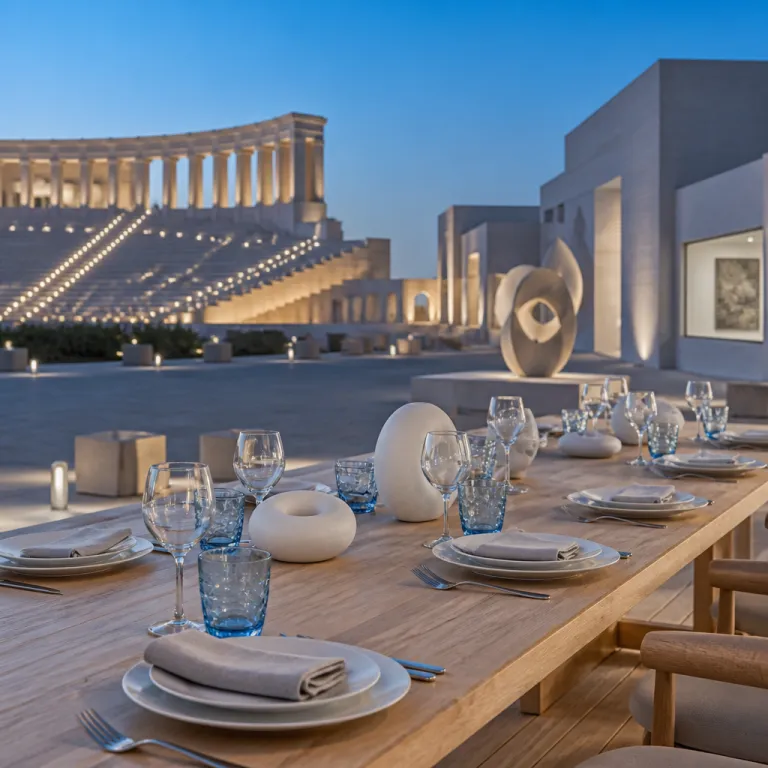
Katara Doha dining after dark: a different kind of cultural stage
Katara Cultural Village shifts character once the sun drops behind Doha and the sand-colored alleyways glow under soft lighting. The same amphitheatre, galleries and mosques that feel scholarly by day become the backdrop for Katara Doha dining that is unapologetically romantic, with couples moving between performances and restaurants as if the whole village were a single, walkable resort. For luxury travelers in Qatar who care as much about a dining experience as a museum collection, this compact peninsula between the Arabian Gulf and West Bay offers an evening that feels curated rather than improvised.
According to Katara’s official visitor information, the village is generally open daily from 10:00 to 23:00, with individual venues and events operating their own schedules. Typical evening art exhibitions often run from around 18:00 to 21:00, while theatre performances and concerts frequently start between 19:00 and 20:00 and continue into late evening. The real story for Katara’s restaurant scene is how these timings choreograph your night, letting you explore a gallery opening, slip into an inviting indoor lounge for tea, then cross a plaza for a late show without ever calling a car. That density of culture and dining in one setting is rare in Doha, where many restaurants sit inside isolated towers or malls, and it is precisely why couples planning a special night should anchor their travel plans around Katara rather than treating it as a quick photo stop.
As Qatar leans into cultural tourism, Katara’s evening programme has become a quiet counterpoint to the blockbuster museum circuit on the Corniche. The methods are straightforward — art galleries, theatre shows and restaurants — but the mix of local theatre groups, visiting orchestras and ambitious chefs generates an experience that feels more lived in than staged. A recent Qatar Philharmonic Orchestra programme, for example, paired a Beethoven symphony with contemporary works by regional composers, drawing a crowd that flowed straight from the opera house into nearby cafés. For guests booking premium hotels through specialist Doha travel platforms, dining in Katara is no longer an optional add-on; it is one of the few places where you can move from opera to outdoor dining tables with sea views in under five minutes, then end the night with afternoon-tea-style pastries in a lounge that still hums close to midnight.
From galleries to 21 High Street: plotting a cultured evening
A well-paced Katara evening starts early, before the main dining rush, when the courtyards are still quiet and the light over the Arabian Gulf softens. You might begin at one of the smaller exhibition spaces near the Katara Amphitheatre, where evening art shows often open from around 18:00, then wander toward the waterfront as call to prayer echoes off the stone and the village’s inviting indoor corridors fill with a mix of residents and visitors from across Qatar. This is the moment when choosing where to eat in Katara stops being a search for a single restaurant and becomes a broader culinary promenade, with the architecture itself setting the tone for what follows.
From the galleries, couples naturally gravitate toward 21 High Street, Katara’s emerging dining artery lined with cafés, dessert bars and more serious restaurants. La Maison Ani, the Doha outpost of Dubai-based chef Izu Ani, anchors the street with a dining room that feels both Parisian and Gulf-facing, serving Mediterranean plates that suit relaxed dinners as well as more formal celebrations. A signature dish such as the truffle rigatoni — rich but portioned for sharing — illustrates how the menu balances indulgence with the kind of lightness that works in Doha’s climate. For readers who want a deeper look at how a single kitchen can define a destination, the story of Alba at Raffles Doha — detailed in a chef-focused piece on how Alba earned its star — shows how Katara’s restaurant scene is maturing beyond hotel all-day-dining clichés.
Not every stop on 21 High Street needs to be a full dining experience; part of the pleasure is grazing. You might pause for tea or a light Arabic–Indian-inspired snack at one café, then cross the street for a Japanese–Thai small plate before your main reservation, using the street as a tasting menu of Doha’s current culinary ambitions. This layered approach to eating out in Katara suits couples who prefer movement over marathon meals, and it mirrors the cultural programming where you can slip from a photography opening to a short theatre piece rather than committing to a single, long performance.
Where to eat: La Maison Ani, Blnk and the new Katara tables
La Maison Ani deserves its reputation as one of the most inviting restaurants in Katara, especially for couples who care about both food and people-watching. The terrace offers direct views onto 21 High Street, while the dining room inside balances soft lighting with enough buzz to feel social without drowning conversation, making it a strong anchor for any Katara dinner itinerary. Menus lean Mediterranean but adapt well to Qatar’s mixed audience, with lighter plates for early evening and richer dishes that suit later, more indulgent relaxed dinners.
Newer arrivals are shifting the narrative from “nice to have” to “destination-worthy” dining. Blnk, an all-day lounge concept within Katara, plays a different role; it is where you might start with afternoon tea after a gallery visit, return for a late-night snack post-theatre, or simply use the space as a base between events. Staff often describe it as a “living room for the village,” and the flexible menu — think sliders, salads and patisserie in the QAR 40–90 range — supports that positioning. For a broader view of how hotel restaurants across Doha are quietly outshining their lobbies, the guide on hotel restaurants that outshine their lobbies shows how Katara’s venues fit into a citywide shift toward chef-led dining rooms.
Katara’s culinary map is not limited to European-leaning menus; couples can easily plan a progressive evening that moves through Japanese, Thai, Indian and Arabic influences without leaving the village. One route might start with a Japanese–Thai-inspired appetiser in a casual spot, move to an Indian–Japanese fusion main course in a more formal restaurant, then end with Arabic–Indian sweets and tea in a quiet lounge overlooking the Arabian Gulf. This variety, when combined with the village’s amphitheatre and opera programming, makes dining in Katara feel less like a single choice and more like a series of well-edited chapters in one night.
Staying inside the story: Raffles, Fairmont and Chedi Katara
For couples booking luxury stays through Doha hotel platforms, the real upgrade is not just a larger suite but the ability to step from room to performance to restaurant without ever touching a steering wheel. Raffles Doha and Fairmont Doha, housed in the sculptural Katara Towers, sit within a short walk of the village’s theatres, galleries and dining venues, turning an evening out in Katara into an effortless nightly ritual rather than a once-off excursion. Alba, the MICHELIN-starred restaurant at Raffles, adds another layer, giving guests a reason to stay on property one night and then explore Katara’s independent restaurants the next.
On the other side of the village, Chedi Katara offers a different kind of intimacy, with architecture that leans more toward Levantine resort than urban tower. The restaurant Chedi Katara operates here as both a day-dining hub and an evening destination, with outdoor dining terraces that frame sea views and indoor spaces that feel almost residential, ideal for couples who prefer a quieter setting. Many suites and terraces overlook pool and beach areas, so you can move from a late swim to a refined dining experience without ever feeling rushed, then stroll into the village for a concert under the stars.
These hotels also reshape how you use time in Doha; instead of fighting traffic between West Bay and the Corniche, you can build a rhythm of pool-and-beach afternoons, cultural evenings and late-night tea in a lounge that never feels transient. For readers curious about pairing coastal stays with more remote experiences, the piece on inland desert escapes most Doha hotel guests miss shows how a Katara base can be combined with dune-side camps for a fuller Qatar itinerary. In that context, the restaurants and cafés of Katara become the urban counterpoint to nights spent under desert skies, giving your trip a narrative arc rather than a series of disconnected hotel stays.
The amphitheatre, opera house and how Katara nights feel different
Katara’s amphitheatre is the architectural anchor of the village, a horseshoe of stone that faces the Arabian Gulf and hosts concerts, film screenings and cultural events under open skies. While the calendar shifts through the seasons, the pattern remains consistent; evenings often pair performances with extended dining hours, so you can plan dinner in Katara around a show rather than squeezing a meal into a narrow pre-theatre window. The Katara Opera House, home to Qatar Philharmonic Orchestra performances, adds an indoor counterpoint, with its own rhythm of classical concerts that attract a more formal crowd and naturally spill into nearby lounges and restaurants afterward.
What makes Katara at night distinct from Doha’s museum and gallery daytime circuit is the way the whole village feels like a single, continuous public space. You might leave a symphony, walk through a colonnade lined with inviting indoor cafés, then find yourself in a quieter square where couples linger over tea and dessert while the sound from the amphitheatre drifts in the background. This permeability between cultural venues and dining settings is rare in a city where many attractions are still siloed inside malls or standalone towers, and it is precisely what gives Katara’s evening dining scene its sense of place.
Practicalities matter too, especially for guests using luxury hotel booking platforms to plan their stay. Katara Cultural Village is officially open daily from 10:00 to 23:00, entry is free and some events may have fees, and guided tours are available with advance booking — or, as the official guidance puts it, “What are the operating hours of Katara Cultural Village? Open daily from 10 AM to 11 PM. Is there an entry fee for Katara Cultural Village? Entry is free; some events may have fees. Are there guided tours available? Yes, guided tours are offered; booking in advance is recommended.” For couples, that means you can treat Katara as an all-day base, starting with lunch in a shaded restaurant, shifting to an afternoon tea in a lounge with panoramic views, then ending with outdoor dining that frames the sea and skyline in equal measure.
Designing a romantic Katara itinerary: from afternoon tea to late night lounges
Planning a romantic night in Katara is less about chasing the hottest reservation and more about sequencing experiences so the evening unfolds naturally. Start with a late-afternoon arrival, when the heat softens and the sea views from the promenade feel gentler, then settle into a café for afternoon tea or a light snack that will not overshadow your main dining experience later. This is also the right moment to walk the village, gather information on which galleries and theatres are active that night, and choose whether your Katara dinner plans will orbit around a concert, a play or simply the pleasure of wandering.
As darkness falls, move toward your chosen restaurant, whether that is La Maison Ani on 21 High Street, a quieter spot inside Chedi Katara or a more experimental Japanese or Indian–Japanese kitchen elsewhere in the village. Aim for a table that gives you either direct views of the street life or a more secluded corner if you prefer intimacy, and do not rush; Katara rewards those who linger, letting the evening stretch into a series of relaxed courses rather than a single, hurried sitting. Afterward, consider a slow walk toward the amphitheatre or opera house, even if you do not hold tickets, simply to feel how the architecture and lighting transform the village into a kind of open-air lounge.
End the night in one of the quieter cafés or hotel lounges, perhaps at restaurant Chedi Katara or a bar overlooking pool and beach areas, where the soundscape shifts from performance to gentle conversation. This is where dining in Katara merges with the broader travel experience in Qatar; you are no longer just eating, but participating in a cultural village that was designed to blend art, theatre and gastronomy into a single, walkable setting. For couples who value both privacy and connection, that balance — between public squares and tucked-away corners, between panoramic views and intimate dining rooms — is what turns a simple meal into an exceptional memory.
FAQ: Katara Cultural Village evenings and dining
Is there an entry fee for Katara Cultural Village in the evening?
Entry to Katara Cultural Village is free at all times, including evenings, which makes it an easy addition to any Doha itinerary. Some theatre performances, concerts at the amphitheatre and special cultural events may require paid tickets, but you can still enjoy Katara’s restaurants, promenades and sea views without a gate charge. This open-access model encourages both residents and visitors to treat the village as a shared cultural living room rather than a gated attraction.
Do I need restaurant reservations for dinner at Katara?
For popular venues such as La Maison Ani, Alba at Raffles Doha and restaurant Chedi Katara, reservations are strongly recommended, especially on weekends and during major cultural events. Walk-ins are often possible at cafés and more casual spots, but couples planning a special evening of dining in Katara should secure at least one key booking in advance. Checking each restaurant’s own privacy policy and booking channels will also help you understand cancellation terms and any seasonal menus.
How does Katara at night compare with Doha’s museum district?
Doha’s museums along the Corniche and in Msheireb excel during the day, when natural light and quieter galleries encourage slow looking. Katara, by contrast, comes into its own after dark, when the amphitheatre, opera house and restaurants create a continuous flow between performances, promenades and dining experiences. For many luxury travelers, the ideal pattern is museums by day and Katara’s culinary village by night, using premium hotels as the bridge between the two.
Can I combine a beach day with an evening at Katara?
Yes, especially if you stay at Chedi Katara or one of the nearby waterfront hotels that offer pool and beach access. Many guests spend the afternoon overlooking pool and sea, then transition directly into evening outfits for dinner and theatre without leaving the district. This proximity is one of the main reasons couples use Doha hotel booking sites to secure Katara-area stays, since it turns logistics into a short walk rather than a cross-city drive.
What should I wear for an evening of theatre and dining at Katara?
Smart-casual attire works well for most Katara evenings, balancing respect for local norms with the relaxed elegance of seaside dining. Dress modestly, with shoulders and knees covered, especially if you plan to move between public spaces, mosques and more formal restaurants. Lightweight fabrics are advisable in warmer months, and a light layer helps when sea breezes pick up during outdoor dining or late-night walks along the waterfront.