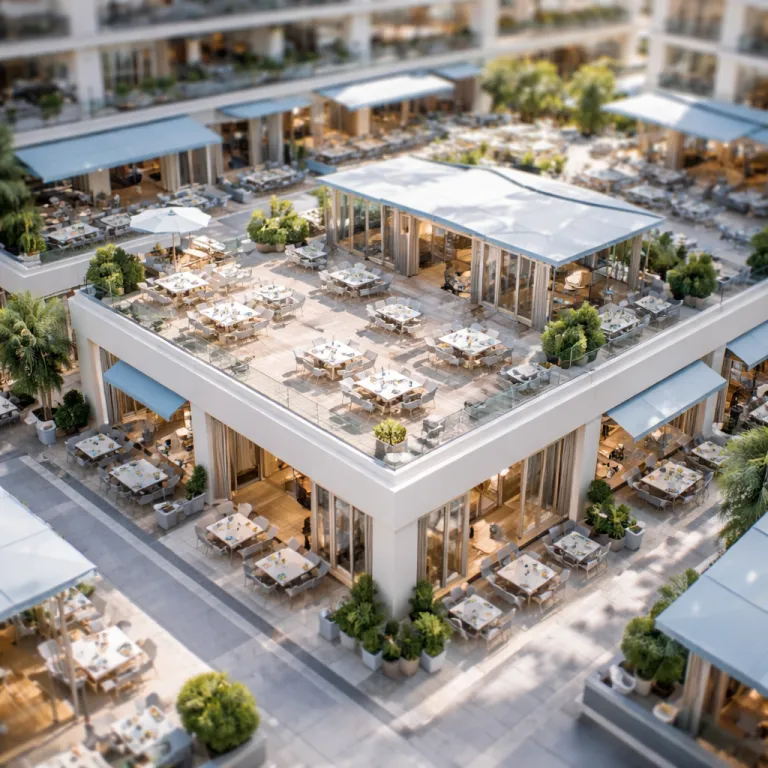
The shift from hotel buffets to a $2 billion dining powerhouse
Doha has moved far beyond the era when hotel buffets defined the city’s restaurants. Today, the conversation around doha restaurants 2026 is about where the best cuisine, most intuitive service and most compelling dining experience intersect for business leisure guests. As Qatar’s dining industry is widely reported to be approaching the $2 billion mark in annual value, hotel managers and restaurant owners are rethinking how every dining room, lobby lounge and rooftop restaurant doha can become a strategic asset.
The Qatar Tourism Authority, working with international hotel chains and local entrepreneurs, has pushed investment into premium restaurants doha, from West Bay towers to the shoreline of Doha West. Their goal is clear: enhance tourism appeal, diversify cuisine and convert every memorable dinner into repeat hotel bookings and higher occupancy. Industry commentary often captures the shift succinctly: “Qatar's dining scene evolved with diverse cuisines and premium options,” reflecting a move away from a narrow buffet model toward a broader, experience led approach.
Behind the headline numbers, the impact on hotel guests is tangible in Doha. A decade ago, many properties relied on one all day restaurant and a lobby café, while now the best hotels curate full culinary ecosystems with licensed venues, regional Middle Eastern concepts and destination seafood counters. For the executive extending a stay, the question is no longer whether the hotel has a restaurant, but whether its venues can rival the best restaurants across the city’s independent scene.
How global names and local icons are rewriting hotel selection
The new wave of openings linked to doha restaurants 2026 is changing how guests choose where to sleep, not just where to eat. When La Maison Ani opens in Katara Cultural Village and Novikov Café launches in Barahat Msheireb, hotel managers nearby know that their own cuisine and service must rise to meet the expectations set by these brands. Business travellers now scan restaurant doha options before they even look at room categories or suite sizes.
Within hotels, the benchmark is set by names like IDAM by Alain Ducasse at the Museum of Islamic Art, where the dining room frames the skyline and galleries of Islamic art below. Here, Alain Ducasse and his équipe translate Middle Eastern flavours into fine dining signature dishes that compete directly with independent best restaurants across Doha West and West Bay. Guests book rooms in nearby properties simply to secure a table for dinner and to experience a full tasting menu that feels inseparable from the city’s cultural narrative.
Our own editorial team at myqatarstay.com tracks this shift closely in our Doha dining guide to hotel restaurants that outshine their lobbies. We see executives choosing hotels based on whether the on site restaurant can match Nobu Doha for seafood finesse, or whether a licensed lounge can offer a quieter alternative to Boho Social on The Pearl island. In this landscape, a hotel without a compelling restaurant doha proposition risks becoming merely a place to sleep between meals taken elsewhere.
Mapping Doha’s new culinary districts for hotel guests
For travellers navigating doha restaurants 2026, geography matters almost as much as the menu. Msheireb Downtown, Katara Cultural Village and The Pearl island have emerged as distinct culinary districts, each shaping how hotel guests plan their days and dinners. Choosing the right hotel now means aligning your base with the dining experience you value most, whether that is museum adjacent fine dining or casual beachfront food.
In Msheireb, Novikov Café brings Italian, French and Asian cuisine into a walkable grid of restaurants doha, where guests can move from a working lunch to a late dinner without ever needing a car. Over at Katara Cultural Village, La Maison Ani joins existing Middle Eastern and Indian concepts, creating a cluster where a single evening might include a seafood starter, a refined main course and a post dinner stroll past performance venues. On The Pearl and nearby Maha Island, Boho Social and other restaurant doha addresses turn the shoreline into a social circuit that competes directly with West Bay hotel terraces.
For those who want to weave gastronomy into a longer stay, we recommend planning around cultural anchors like the Museum of Islamic Art and its neighbour IDAM, then extending into a weekend using our gastronomes weekend in Doha itinerary. This approach lets you pair hotel wellness mornings with lunches in Msheireb, then shift to licensed venues in West Bay for sunset views. The result is a curated circuit of doha restaurant experiences that feels coherent rather than improvised.
Hotel restaurants versus independents ; competition, complement or both
The rise of independent restaurants doha has forced hotels to rethink their food and beverage strategy. Where once a captive audience accepted average cuisine in a convenient setting, today’s guests compare every hotel menu against the best restaurants across the city. The question facing operators is whether to double down on in house concepts or embrace partnerships that bring external chefs and brands into the property.
Some of the strongest examples in doha restaurants 2026 show that collaboration can be more powerful than competition. When a hotel hosts a licensed Nobu Doha or an outpost of a renowned Indian restaurant, it instantly elevates its dining experience to destination status for both residents and travellers. At the same time, independent Middle Eastern and seafood specialists in areas like Doha West and Katara Cultural Village create a halo effect, encouraging guests to stay longer and sample multiple venues across a single trip.
From a guest perspective, the ideal scenario is choice rather than loyalty to one restaurant doha address. You might enjoy a structured fine dining dinner at IDAM one evening, then opt for a relaxed Boho Social brunch on the island the next day, while relying on your hotel’s all day restaurant for efficient business lunches. This ecosystem blurs the line between hotel and city, turning the entire urban fabric into an extended dining room where service standards and signature dishes become the real differentiators.
Inside the dining room ; what luxury guests now expect from hotel cuisine
Walk into any serious hotel dining room in Doha today and you will feel the shift immediately. The focus is no longer on theatrical chandeliers but on how the chef, service team and menu design create a coherent narrative from first bite to last. For business leisure travellers, the best cuisine is measured in precision and restraint rather than spectacle.
Menus at leading doha restaurant addresses now balance Middle Eastern heritage with global technique, often highlighting seafood from regional waters alongside carefully sourced international produce. At IDAM by Alain Ducasse, for example, signature dishes reinterpret local flavours through a French lens, while Nobu Doha leans into Japanese Peruvian fusion with a Gulf accent. Even more casual restaurants doha within hotels are expected to offer thoughtful vegetarian options, lighter business lunch formats and a full range of licensed and non licensed pairings that respect local norms.
Service has also matured, moving from scripted formality to informed, conversational hospitality that suits executives extending their stay. Teams are trained to guide guests through the menu like a living guide to doha restaurants 2026, suggesting when to choose a tasting sequence, when to share plates and when to leave space for a late meeting. In this context, the hotel restaurant becomes less of a default option and more of a strategic ally for guests managing tight schedules and high expectations.
Technology, wellness and the next chapter of Doha’s hotel dining
The growth of doha restaurants 2026 is not only about new names and bigger dining rooms. Behind the scenes, digital ordering platforms, cloud kitchens and even autonomous delivery pilots are reshaping how hotels manage food production and room service. For guests, the benefit is faster, more reliable service and the ability to access both in house cuisine and selected external restaurant doha partners from a single interface.
Post World Cup, Qatar’s hospitality sector has embraced data driven planning to align hotel dining with wellness and sustainability trends. Executives booking through platforms like myqatarstay.com increasingly ask whether a property can offer balanced menus, late night lighter food and breakfast options that support early meetings without sacrificing quality. Our feature on luxury wellness hotels in Qatar shows how leading properties integrate spa programmes with cuisine that respects both regional flavours and global nutritional standards.
As the dining industry value climbs and hotel occupancy is reported to hover above seventy percent in recent years, the most forward looking properties treat every restaurant, lounge and in room tray as part of a single dining experience. They partner with restaurant owners, leverage technology tools and respond quickly to guest feedback to refine signature dishes and service rituals. For travellers, this means that choosing a hotel in Doha is increasingly equivalent to choosing a personal route through one of the Gulf’s most dynamic restaurant landscapes.
Key figures behind Doha’s restaurant and hotel dining boom
- Qatar’s dining industry is projected in various market studies to reach around 2 billion USD in value, reflecting a rapid shift from hotel buffet dependence to a diversified restaurant doha ecosystem that attracts both residents and international visitors. Recent estimates from regional foodservice analysts and hospitality consultancies, including summaries cited by Qatar Tourism, place the broader market in this range.
- Hotel revenue in Qatar has been estimated at more than 530 million USD in recent reporting, with food and beverage operations contributing a growing share as guests prioritise cuisine and dining experience when selecting properties. Aggregated figures from industry reviews referencing Qatar’s Planning and Statistics Authority and STR performance data support this order of magnitude.
- Average hotel occupancy in the country has been cited at above 70 percent in several industry reviews, and analysts link part of this performance to the rise of premium restaurants doha and fine dining venues embedded within major hotels. Post tournament reporting by global hotel benchmarking firms has repeatedly highlighted Doha’s relatively resilient occupancy compared with regional peers.
- The national foodservice market is expected to grow at close to 9 percent annually over the coming years, driven by investment in new concepts, technology adoption and the arrival of international brands in districts such as West Bay, Msheireb and Katara Cultural Village. Forecasts from Middle East restaurant market outlooks and GCC hospitality growth reports commonly reference a high single digit compound annual growth rate for Qatar.
- Digital ordering platforms and cloud kitchens are increasingly used by hotels and independent restaurants in Doha to optimise room service, banqueting and off site catering, improving both speed and consistency for guests. Operators interviewed in local business media often point to these tools as a key factor in managing peak demand and maintaining quality.
FAQ ; what hotel guests need to know about Doha’s dining landscape
How has Qatar’s dining scene evolved for hotel guests ?
Qatar’s dining scene has expanded from a hotel buffet centric model to a citywide network of premium restaurants doha, fine dining venues and specialised cuisine concepts. Guests now find serious seafood counters, Middle Eastern tasting menus and licensed lounges both inside hotels and in nearby districts. This evolution gives travellers far more choice when planning business dinners or leisure focused weekends.
What impact does the dining boom have on hotel bookings in Doha ?
The dining boom directly influences hotel selection, as many guests now choose properties based on the strength of their restaurants and proximity to culinary districts. Hotels with acclaimed restaurant doha offerings, such as those near IDAM or Nobu Doha, often see higher demand from business travellers who value efficient yet memorable meals. Strong food and beverage reputations also support higher room rates and longer stays.
Are there new dining technologies in Qatar’s hotels and restaurants ?
Yes, hotels and restaurants in Doha increasingly use digital ordering platforms, cloud kitchens and data driven reservation systems to streamline operations. Some properties experiment with autonomous delivery models for room service and internal logistics, improving speed without compromising service standards. For guests, this translates into smoother ordering, clearer menu information and more reliable timing.
Which areas of Doha are best for hotel guests focused on dining ?
Msheireb Downtown, West Bay, Katara Cultural Village and The Pearl island are key zones for guests who prioritise cuisine. These districts combine high end hotels with independent restaurants doha, from Middle Eastern and Indian concepts to seafood and fine dining. Staying in or near these areas reduces travel time between meetings, cultural visits and dinner reservations.
How should travellers plan their dining experience when booking a hotel in Doha ?
Travellers should first clarify whether they prefer to rely on in house hotel restaurants or explore the wider doha restaurant scene. It is wise to reserve tables at sought after venues such as IDAM by Alain Ducasse or Nobu Doha well in advance, especially for peak evenings. Checking for special promotions and tasting menus can also help align budgets with the best available dining experience.